


When I write dialogue, I often catch myself doing too much.
Explaining, clarifying, justifying — as if my characters would lose their way without me holding their hands. But over time, I’ve learned that what’s left unsaid often carries more meaning than all the words I can string together.
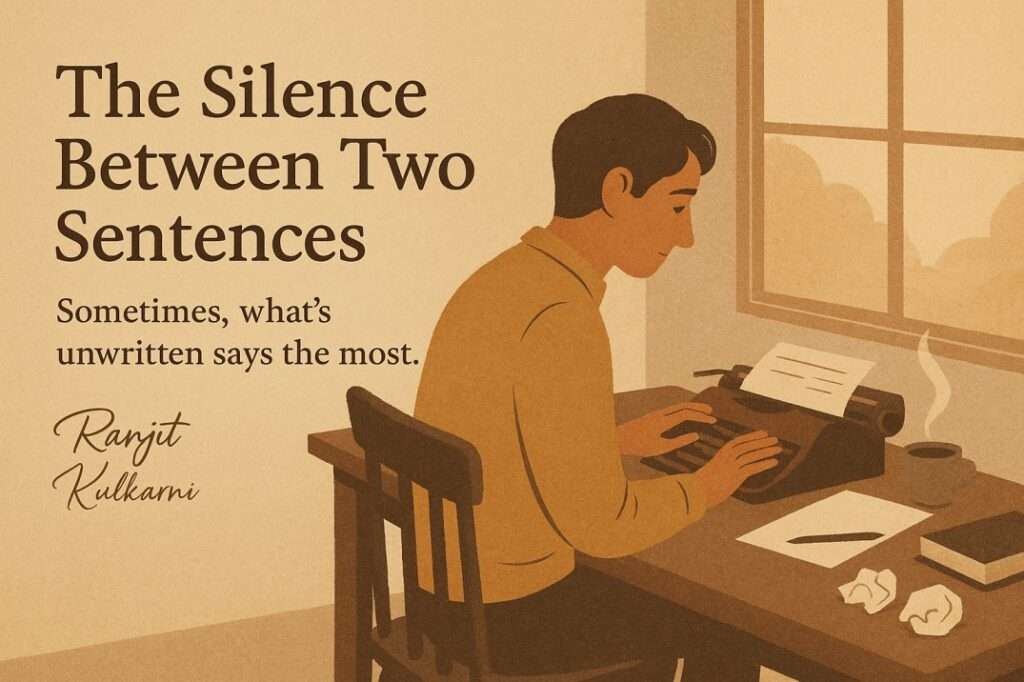
It’s the silence between two sentences that gives the story its heartbeat.
Think of it. A pause between “I’m fine” and the next line can say more than a paragraph ever could. The unspoken hesitation, the breath that lingers — that’s where the reader’s imagination steps in. That’s where stories come alive.
Early in my writing days, I tried to explain everything. I wanted the reader to know exactly what my character felt, why they acted the way they did. But as I wrote more, I realized that overexplaining drains the life out of a moment.
Sometimes, all a scene needs is the rhythm of what’s missing.
It’s a strange truth of writing — the fewer words you use, the more space you give for understanding. The reader becomes a silent collaborator, filling in the pauses with their own emotions, memories, and meanings.
That silence — the breath between sentences — isn’t emptiness. It’s the writer’s quiet trust in the reader.
Now, when I finish a scene, I don’t ask if I’ve written enough. I ask if I’ve left enough unsaid.
Because words move the story forward.
But silence — silence gives it depth.
***