When I turned writer, I never told anyone that I was just a writer.
In my corporate years, the dreaded question — “What do you do?” — had a simple answer: “I work for …” The company name changed over two decades, but the conversation stopped there. No one asked more, no one expected more.
Now, when I say “I am a writer,” it never ends there. It sparks curiosity. It invites pauses. It demands a backstory.
So, I found myself telling stories.
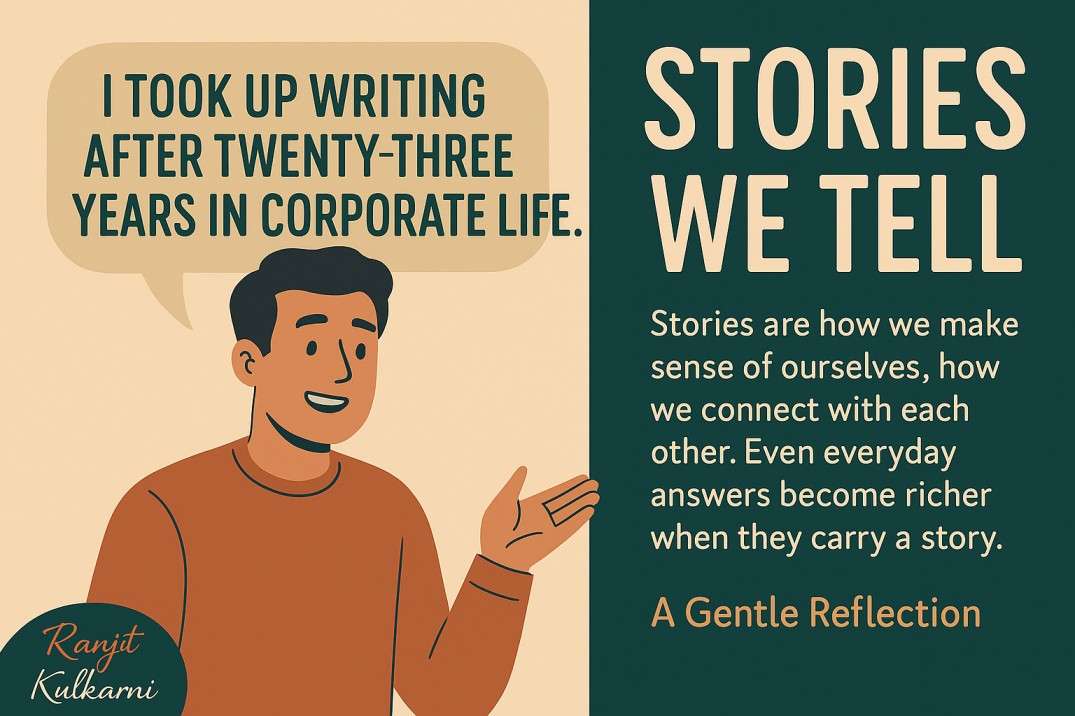
“I took up writing after twenty-three years in corporate life.”
“I am an independent consultant who also writes.”
Or, when someone was feeling creative on my behalf:
“He is following his passion in semi-retirement.”
“He was always a writer in disguise.”
Each version carried shades of truth, shades of fiction. Like the six blind men and the elephant, every questioner believed their version of me. And why not? It made for better conversation.
The fact is, “I am a writer” never felt enough — for them, or for me. A present-tense label without a past or a future feels incomplete. People want origins. They want direction. They want the character’s arc.
Lately, the questions have shifted too.
“What’s next?”
“When is the bestseller coming?”
“Are you aiming for an award?”
It seems we are never content with where someone is. We want to know where they came from and where they are going.
That’s when I realized: the audience is always looking for a story. Not just a statement. Not just a label. A story that links past to present, present to future.
So why not tell one? Otherwise, how boring would life be, and how drab would conversations become, without the stories we tell?
***